

This post may contain affiliate links, view our disclaimer for details.
If you’ve been vegan for a while, you’re probably familiar with the classic vegan buttermilk substitute made by mixing plant milk with vinegar. I’ve used this shortcut plenty of times myself, and it definitely works in a pinch for certain recipes. Over the years though, as I learned more about how traditional buttermilk is made and how it behaves in baking, I found myself wanting to create a vegan version that gets as close to the real thing as possible.
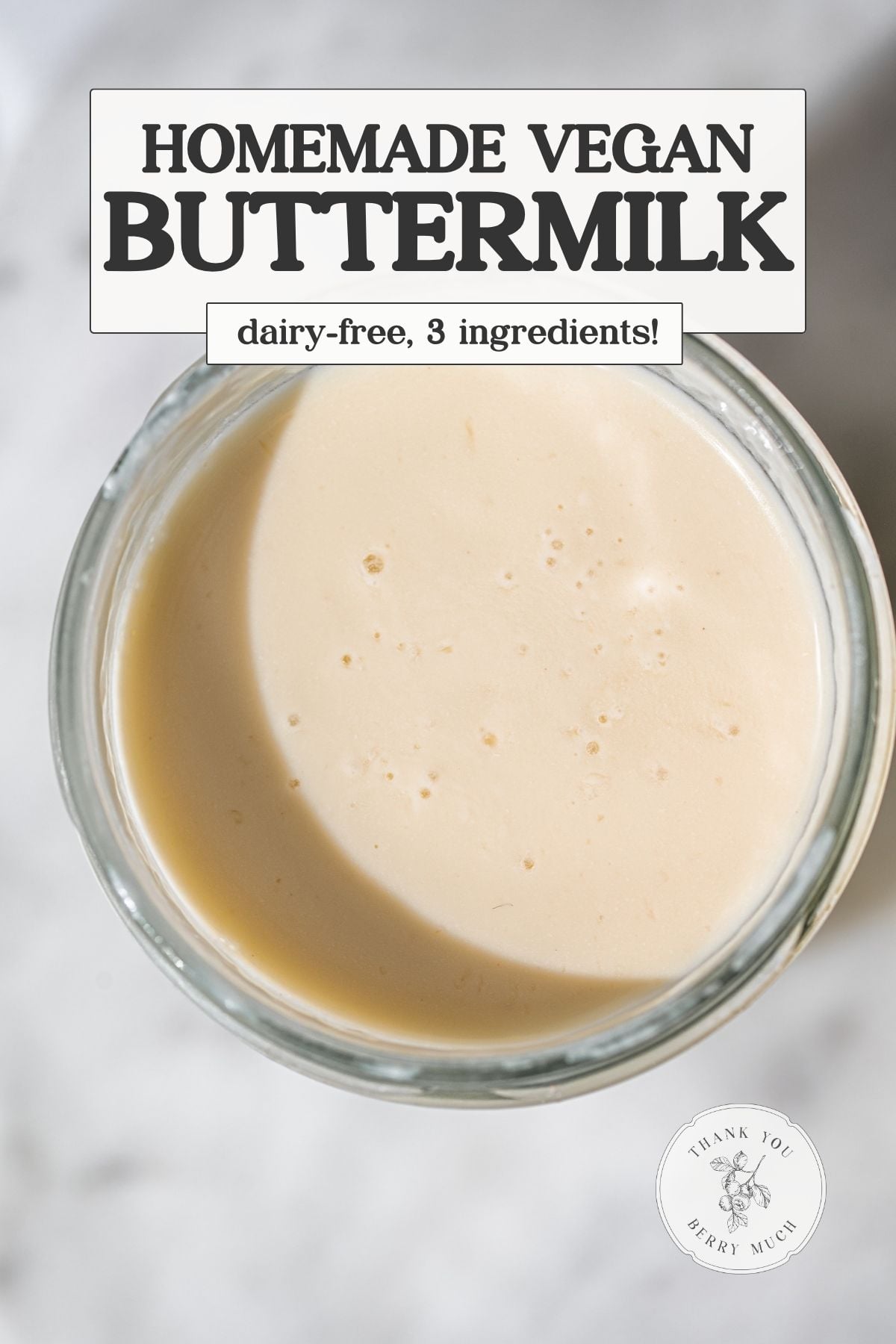
This dairy-free buttermilk is thicker, creamier and closer nutritionally to dairy buttermilk than the vinegar-only version. Plus, it’s incredibly easy to make, so let’s get into it.
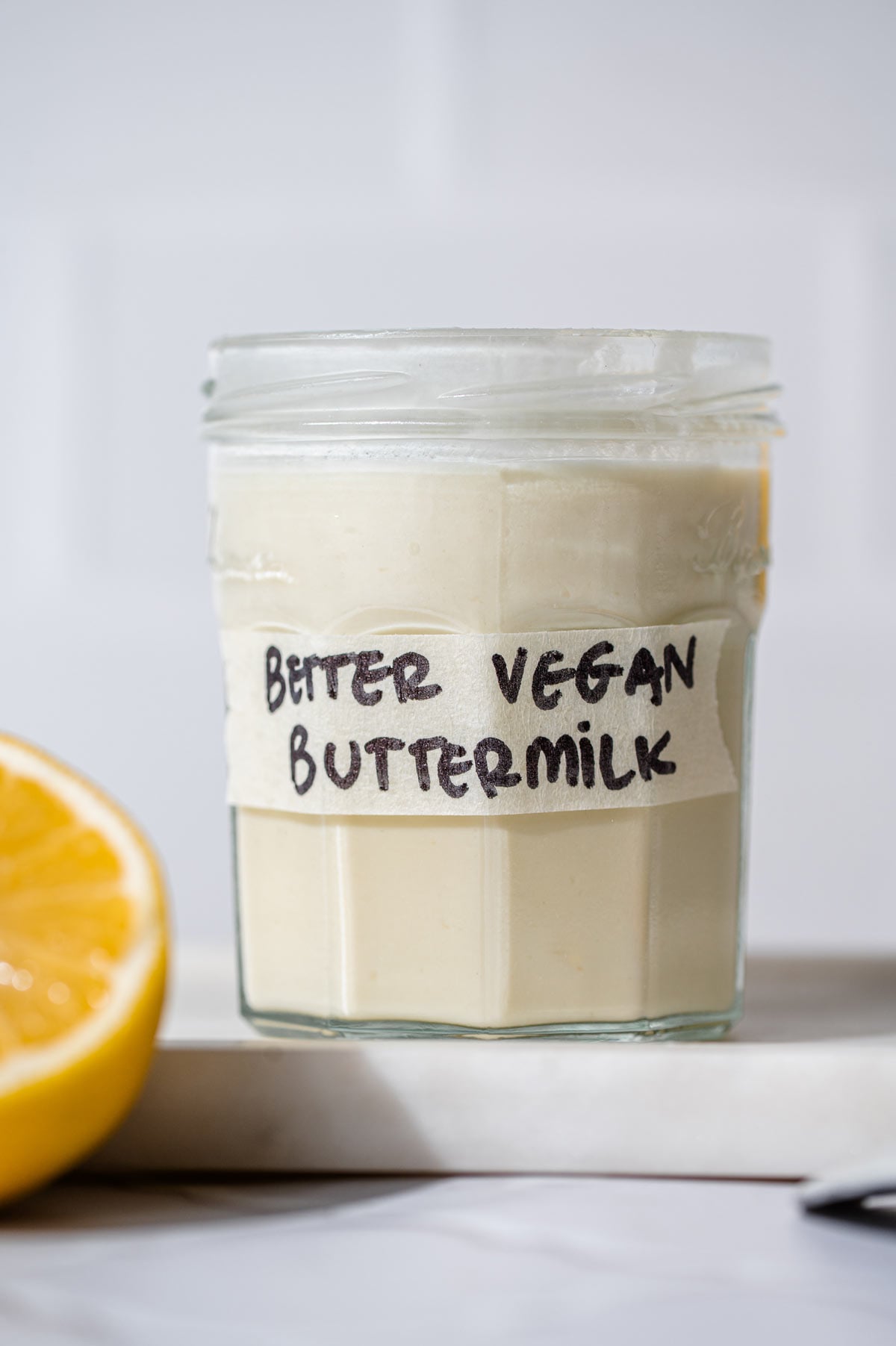
Why You’ll Love This Dairy-Free Buttermilk
This vegan buttermilk is designed to mimic traditional buttermilk as closely as possible — from the tang and texture to how it behaves in baking and sauces. It’s quick to make and uses simple ingredients you likely already have on hand.
Emily’s Recipe Notes:
- Flavor: Lightly tangy with a mellow, cultured flavor similar to traditional buttermilk
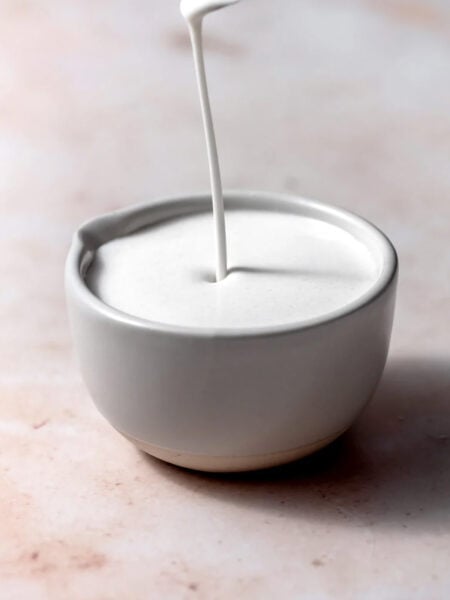
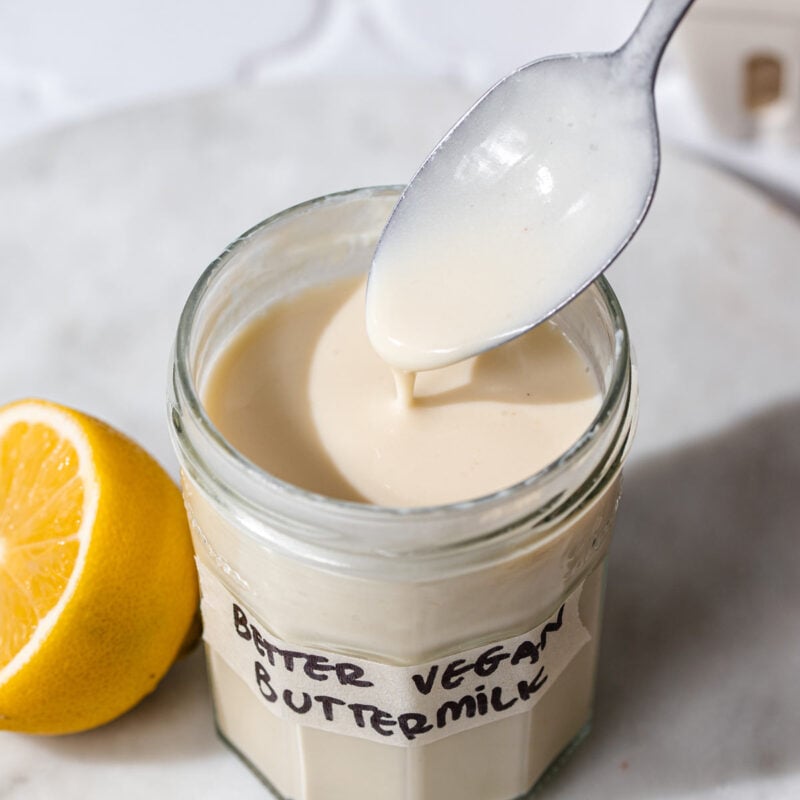
- Texture: Thick, smooth, and creamy without the separation common in other non-dairy buttermilk recipes
- Difficulty: Super easy and beginner-friendly
- Time: Ready in about 2 minutes
Why This Recipe Works
Traditional buttermilk is made through culturing, not just adding acid to milk. This gives it a slightly thicker consistency, a balanced tang, and a pH around 4.4-4.8. It actually plays three important roles in recipes: acidity, flavor, and texture.
The acidity reacts with baking soda to create lift and also tenderizes gluten, which keeps baked goods soft. The fermentation process gives buttermilk its signature tang, and the proteins and fats help create a thicker, more cohesive liquid that improves moisture and crumb structure.
Many non-dairy buttermilk alternatives use plant milk mixed with vinegar or lemon juice. That works well for providing acidity and can produce good results in some recipes where lift is the main goal. However, that mixture usually doesn’t fully recreate the body, smooth texture, or cultured taste of traditional buttermilk.
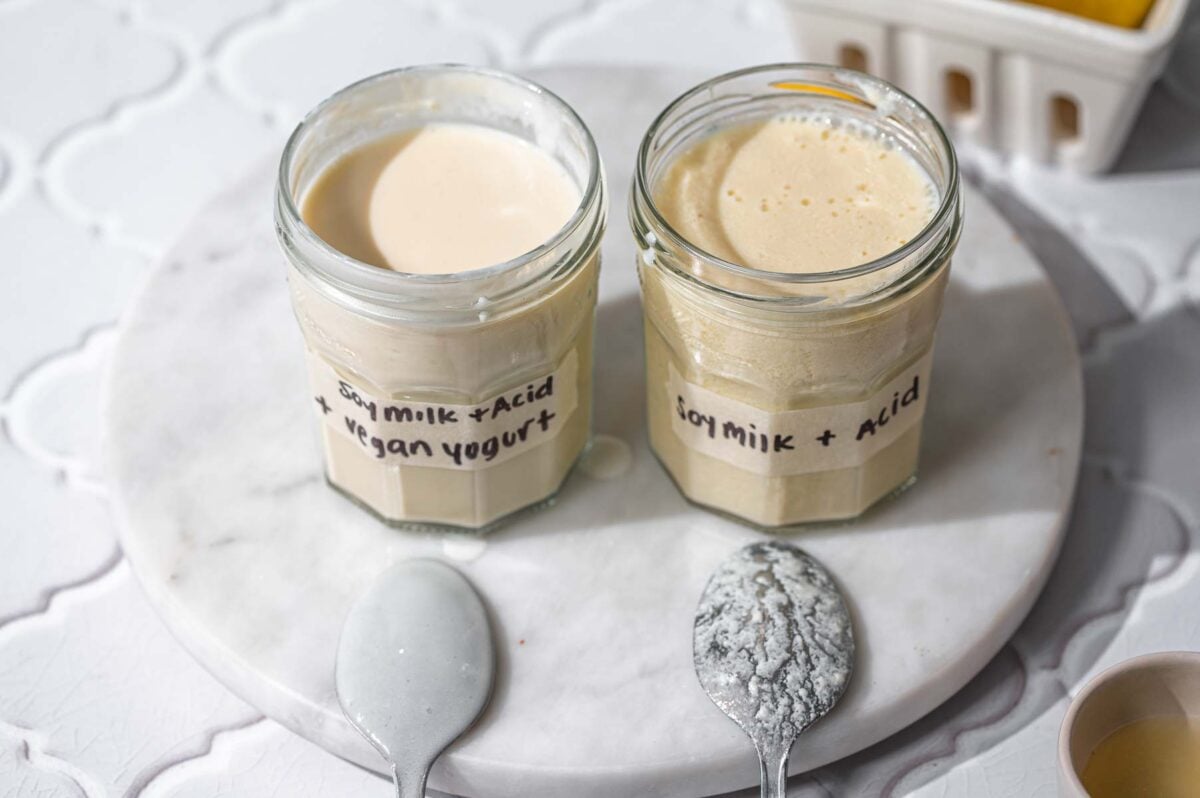
Dairy-Free Yogurt Adds Body and Stability
Yogurt naturally thickens the mixture, adds live cultures, and helps keep it emulsified, which creates a smoother, more cohesive liquid. This makes the buttermilk behave more like traditional cultured buttermilk in both baking and sauces.
I tested several combinations of plant milks, acids, and ratios to create a vegan buttermilk that behaves as closely as possible to traditional buttermilk in baking and sauces. Here are the key takeaways from testing.
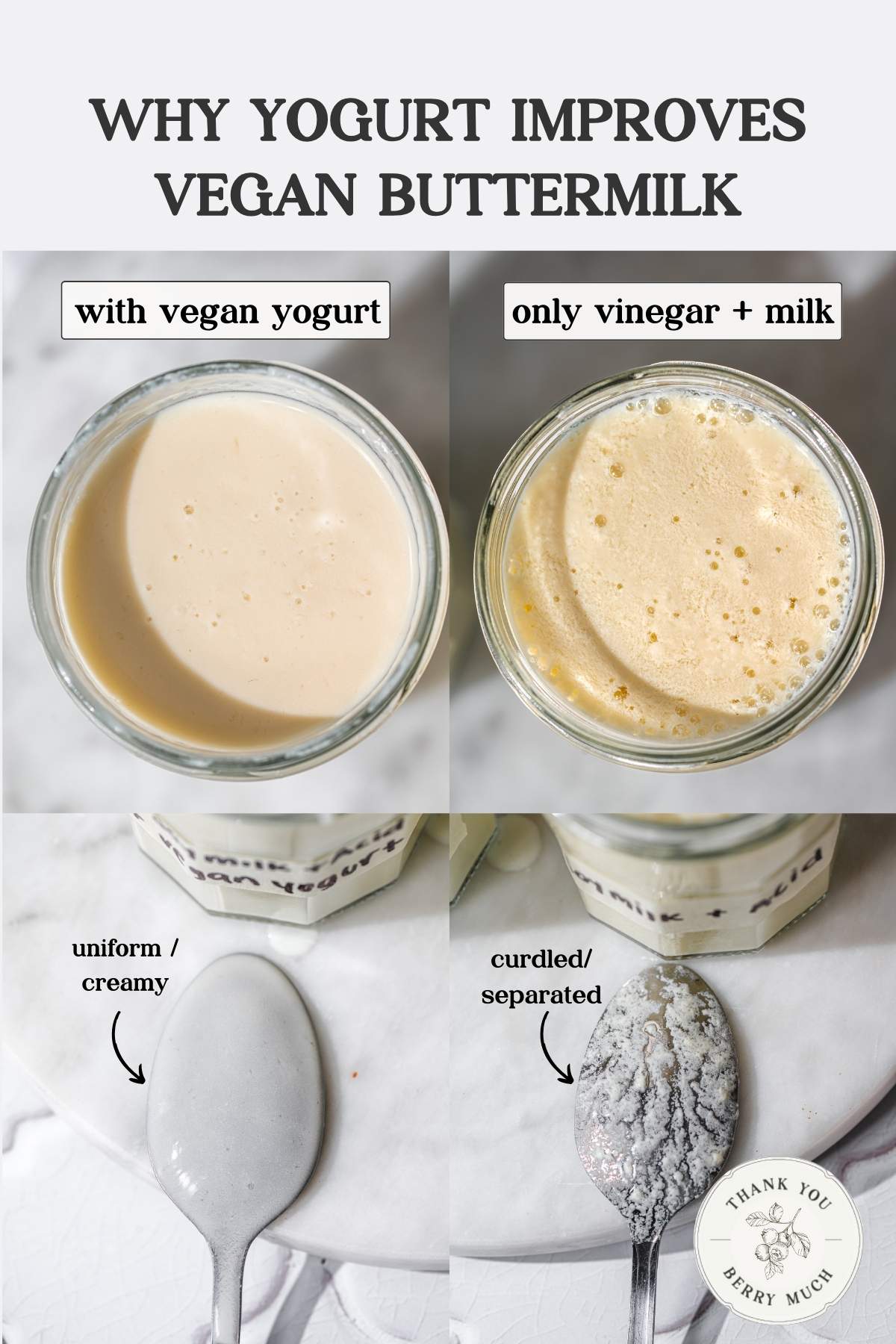
✔ Yogurt Improves Texture
Adding dairy-free yogurt lowers the starting pH slightly, meaning less vinegar or lemon juice is needed to reach a similar acidity level. This helps create a more balanced tang.
✔ Acid Choice Changes Flavor
Apple cider vinegar and lemon juice both work well. Vinegar is slightly more consistent in acidity, while lemon juice has a brighter flavor.
Vegan lactic acid is optional but creates a tang closer to traditional cultured buttermilk. If using it, about ½ teaspoon per cup of plant milk works well.
✔ pH Testing Summary
Traditional buttermilk usually falls around pH 4.4–4.8. This recipe is designed to land in a similar range so baking soda activates properly and baked goods stay tender.
| Mixture Tested (1/2 cup milk) | Approximate pH |
|---|---|
| West Life Soy milk (room temp) | 7.2 |
| Soy milk + 30g Forager vegan yogurt | 6.25 |
| + Lemon juice (½ tbsp) | 4.1 |
| + Apple cider vinegar (½ tbsp) | 4.42 |
| + Lactic acid (¼ tsp) | 4.56 |
| + Lactic acid (½ tsp) | 3.6 |
| Soy milk + ACV (½ tbsp, no yogurt) | 4.9 |
| Soy milk + ACV (¾ tbsp, no yogurt) | 4.45 |
During testing, I also found that adding yogurt reduced how much vinegar or lemon juice was needed to reach a similar acidity level. That helps prevent the sharp vinegar flavor that can sometimes come through in simple substitutes.
Ingredients
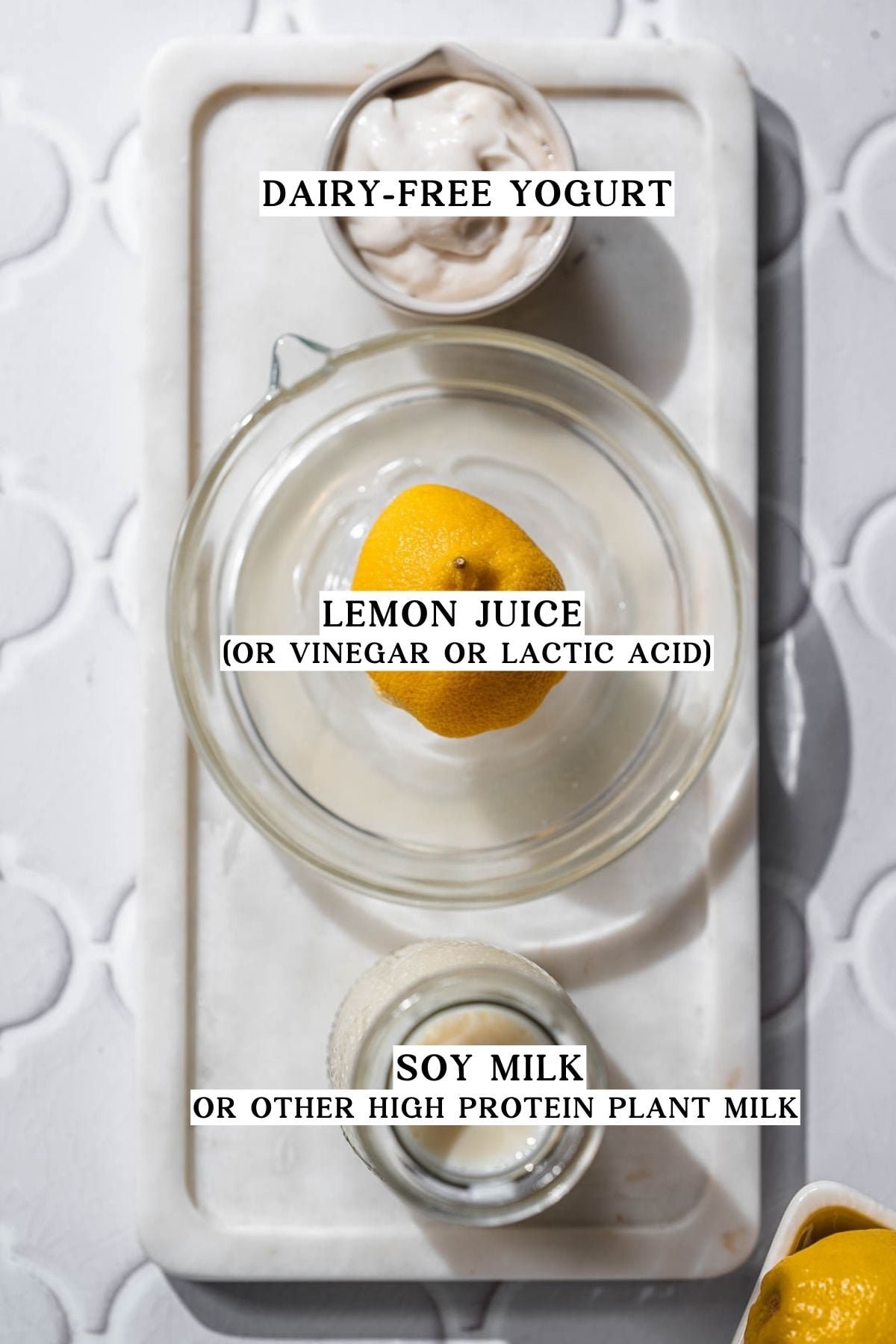
Ingredient Highlights & Some Swaps
Traditional whole milk buttermilk typically has a mildly tangy flavor, a pourable but slightly creamy consistency, and a pH that usually falls around 4.4–4.8.
It also contains protein and fat that contribute to texture and mouthfeel. This recipe is designed to mimic those characteristics using plant-based ingredients.
Soy Milk (or Another High-Protein Plant Milk)
Higher-protein plant milks create the most buttermilk-like texture and stability.
My preferred option is West Life soy milk, but Silk soy milk, Ripple pea protein milk, and Good Karma flax milk also work well. Unsweetened varieties are best to maintain a neutral flavor and consistent results.
Lemon Juice, Vinegar, or Lactic Acid
Acid lowers the pH and creates the tang and baking soda reaction in baking.
Apple cider vinegar and lemon juice both work well. Lemon has a brighter flavor. ACV is more fruit-forward.
Vegan lactic acid can also be used. It will create a tang closest to traditional cultured buttermilk when used in small amounts.
Dairy-Free Yogurt
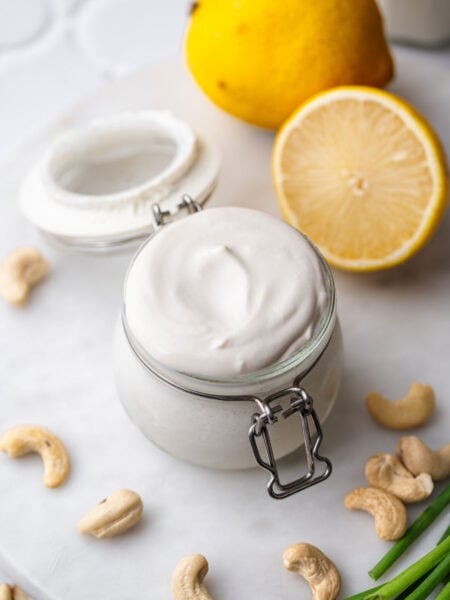
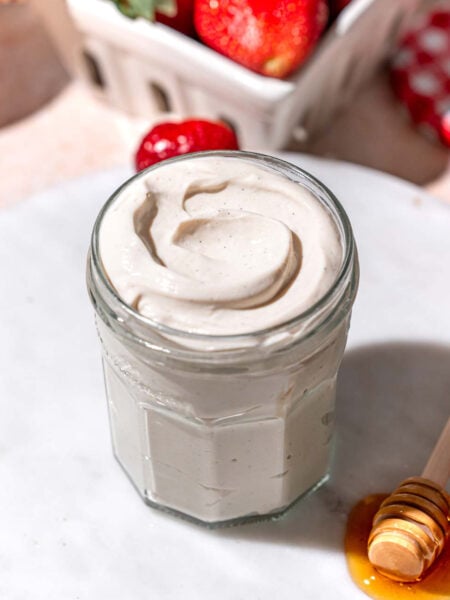
Dairy-free yogurt thickens the mixture and helps create a smoother, more cohesive texture. It also contributes mild acidity, which reduces how much vinegar or lemon juice is needed. Plain, unsweetened coconut or soy yogurts tend to work best. I like to use Forager’s Unsweetened Coconut + Cashew Yogurt.
How to Make Vegan Buttermilk
Exact ingredient quantities are in the recipe card below!
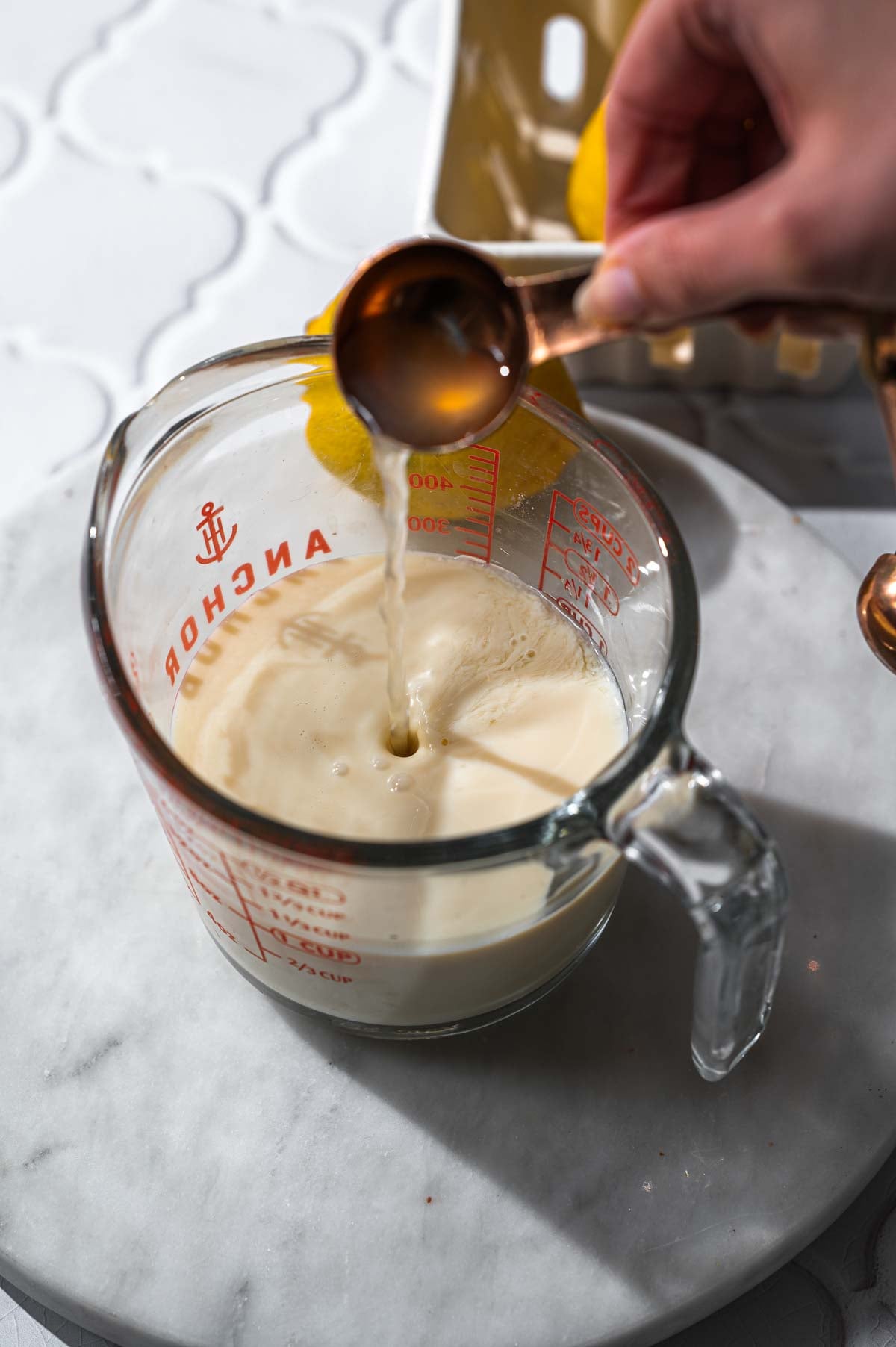
Add the dairy-free milk (ideally soy milk), dairy free yogurt and lemon juice, vinegar or the vegan lactic acid powder to a measuring cup. Whisk to combine.
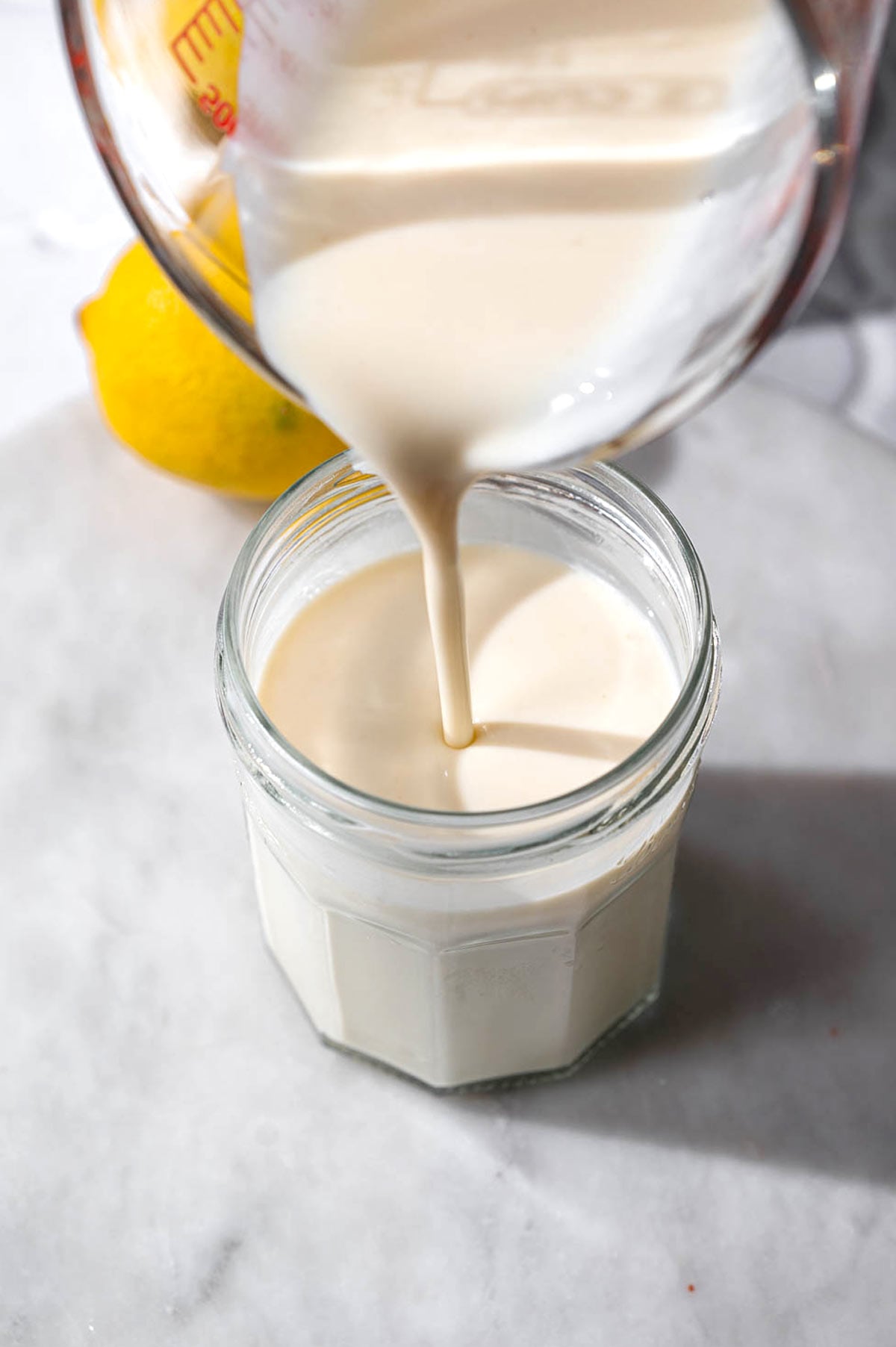
Transfer to a clean jar and keep in the fridge until ready to use. That’s it!
How to Use Vegan Buttermilk
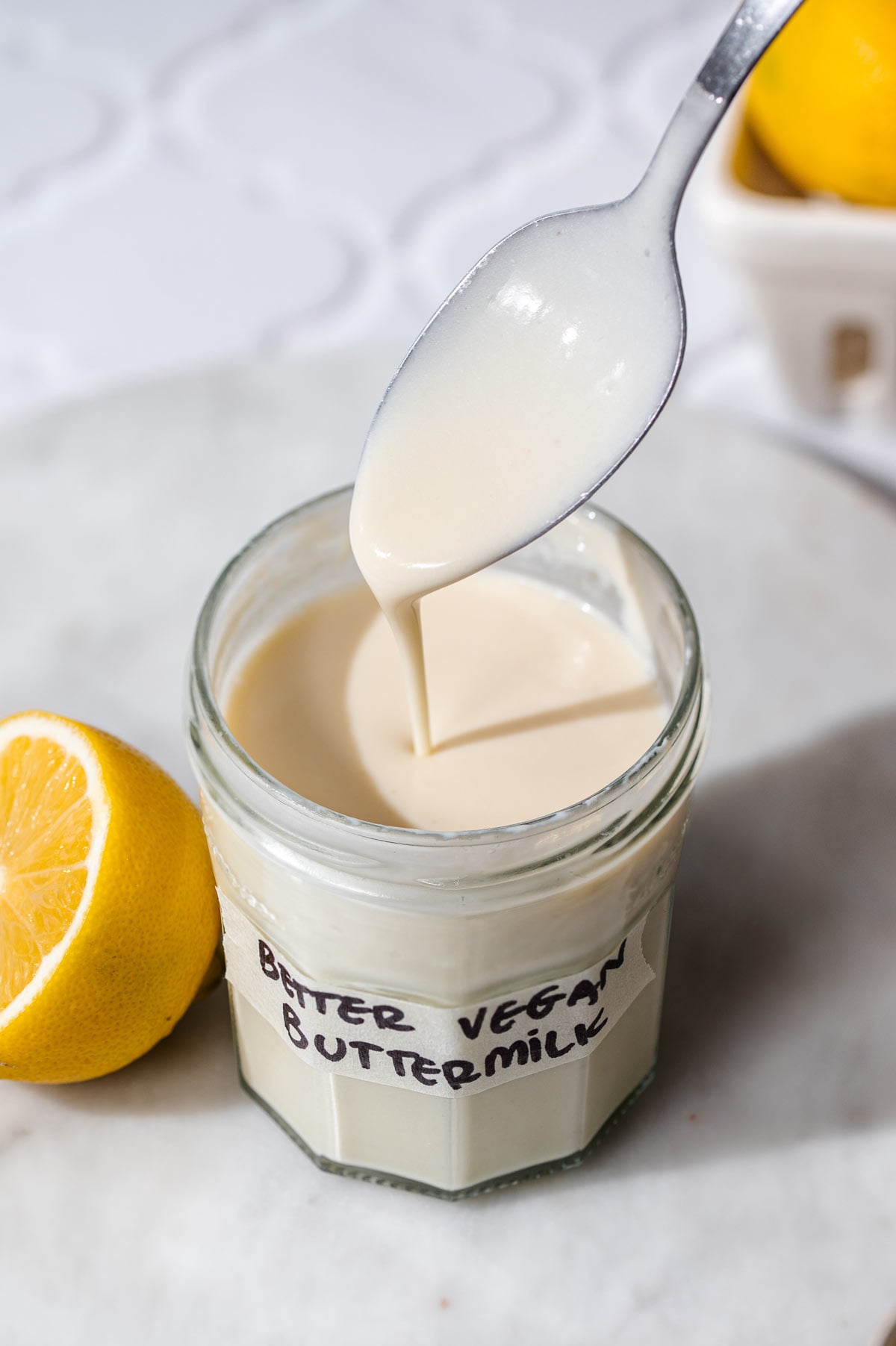
This vegan buttermilk can be used as a direct 1:1 substitute for traditional buttermilk in most recipes. It works especially well in pancakes, waffles, muffins, biscuits, cakes, and quick breads where buttermilk helps activate baking soda and create a tender crumb.
It also works well in savory recipes like dressings, marinades, and sauces where a smooth, lightly tangy flavor is important (you could use it in my vegan buttermilk ranch).
Some Common Questions
Yes. This vegan buttermilk works as a direct 1:1 substitute for traditional buttermilk in most recipes, including pancakes, biscuits, muffins, cakes, and dressings. It’s designed to mimic the acidity, protein and fat content of dairy buttermilk so it performs similarly in baking.
Higher-protein plant milks typically produce the best results because they create a thicker and more stable texture. Soy milk works especially well, but pea protein milk and high-protein flax milk are also good options. Lower-protein plant milks can work, but they may create a thinner mixture.
Yes, but the texture will be thinner and may separate faster. If skipping the yogurt, you will need to increase the amount of acid (1 1/2 tablespoons of lemon juice or vinegar per cup of milk). The yogurt helps create a thicker, more traditional buttermilk consistency.
Both work well and create similar baking results. The pH of vinegar is more consistent from brand to brand, while the pH of lemons can vary quite a bit. Either can be used depending on personal preference and what you have available.
Vegan buttermilk helps activate baking soda, which creates lift and improves texture in baked goods. It also helps tenderize gluten, resulting in softer cakes, pancakes, and quick breads.
More Vegan Dairy Recipes
Best Vegan Buttermilk Substitute – Ready in 2 Minutes!
Rate this RecipeIngredients
- 1 cup unsweetened soy milk, 245g or other high protein plant milk – see note 1
- ¼ cup unsweetened dairy-free yogurt, 60g – see note 2
- 1 tbsp lemon juice or apple cider vinegar, or ½ tsp vegan lactic acid – see note 3
Instructions
- Whisk all the ingredients together in a measuring cup until well combined.1 cup unsweetened soy milk, ¼ cup unsweetened dairy-free yogurt, 1 tbsp lemon juice or apple cider vinegar
- Transfer to a sterilized jar and refrigerate until ready to use, up to 1 week. That’s it!
Recipe notes
Did You Make This?
Leave a star rating and a comment below to let others know how it turned out for you!





Did You Make This Vegan Buttermilk Substitute?
I’d love to know! Leave a star rating and comment below!